Assisted Living Aids
Assisted Living facilities, which include Personal Care Homes and Nursing Homes, are out
there for you whenever you can no longer provide all of the care that a person
needs at home. Providing 7x24 monitoring and care at home is cost prohibitive
for most of us. Whether the need is for physical care or memory care, making
the decision to move a parent, spouse, or sibling out of the home and into a care
facility is always a difficult thing to do. But,often it improves their quality of
life as well as yours.
I finally had to make that difficult decision for my wife who was suffering from Vascular
Dementia. One thing that I found out right away is that you give up a lot of
control whenever you do that. Assisted Living facilities have a lot of rules.
Many are common sense rules that the facility has imposed due to their experience in
caring for their community. But, many of the rules have been dictated by the
government. Many of those government imposed rules are designed to protect the
residents from unscrupulous operators while they are in a facility. They make sense.
However, many of those government imposed rules seem to have been have been put in
place as a result of situations which have occurred that have resulted in litigation.
Those types of rules do not always make sense because some of them seem to be
overreaching, and some of them can have adverse side effects.
Safe Dementia Bed
|
My wife had rolled out of her bed in the facility more than once. It seems that this is
common with people who have dementia. Something that we have that senses the edge of the
bed while we are sleeping and tells us to stop there is lost whenever dementia strikes.
Initially she just had some bruises.
But then it resulted in a fractured hip, requiring a partial hip replacement.
Some kind of a partial bed rail or similar device seemed to be called for. However, I
encountered a flurry of rules that ban the use of any kind of partial bed rails or
similar device designed to keep her in her bed. Being frustrated by the rules, I
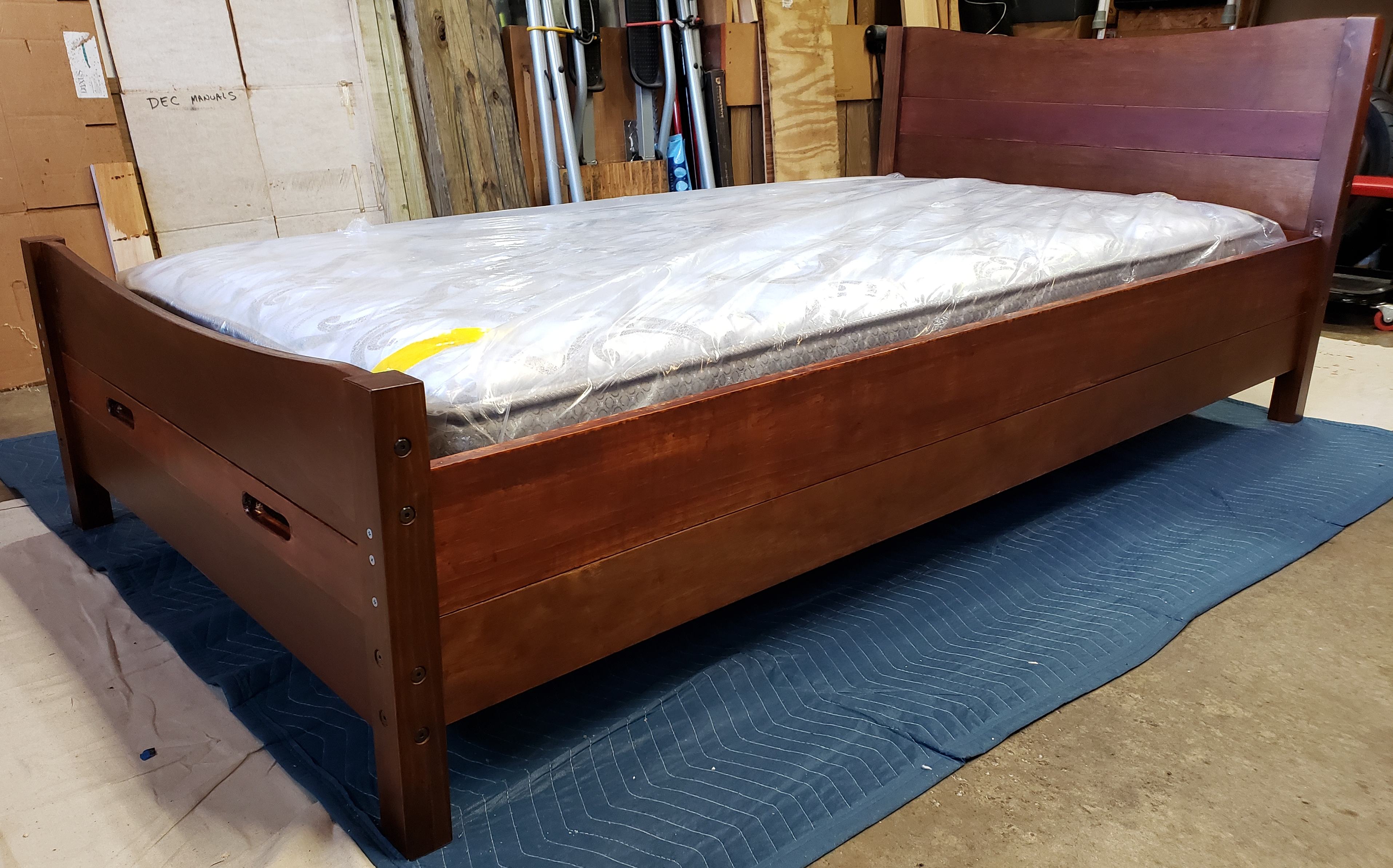
created a 'Safe Dementia Bed’ for her.
While it may not look particularly 'safe' in this photo, the soft pillow top mattress that
was used compresses with body weight so that you are below the board added to each side
whenever lying in it. Thus, it will be encountered whenever rolling toward the edge. It
is also lowered.
Click Here for Details
|
Answer-Only Phone
|
I had a private landline installed in my wife’s room so that she could continue to
converse with her friends. Initially she remained people oriented, and could talk about
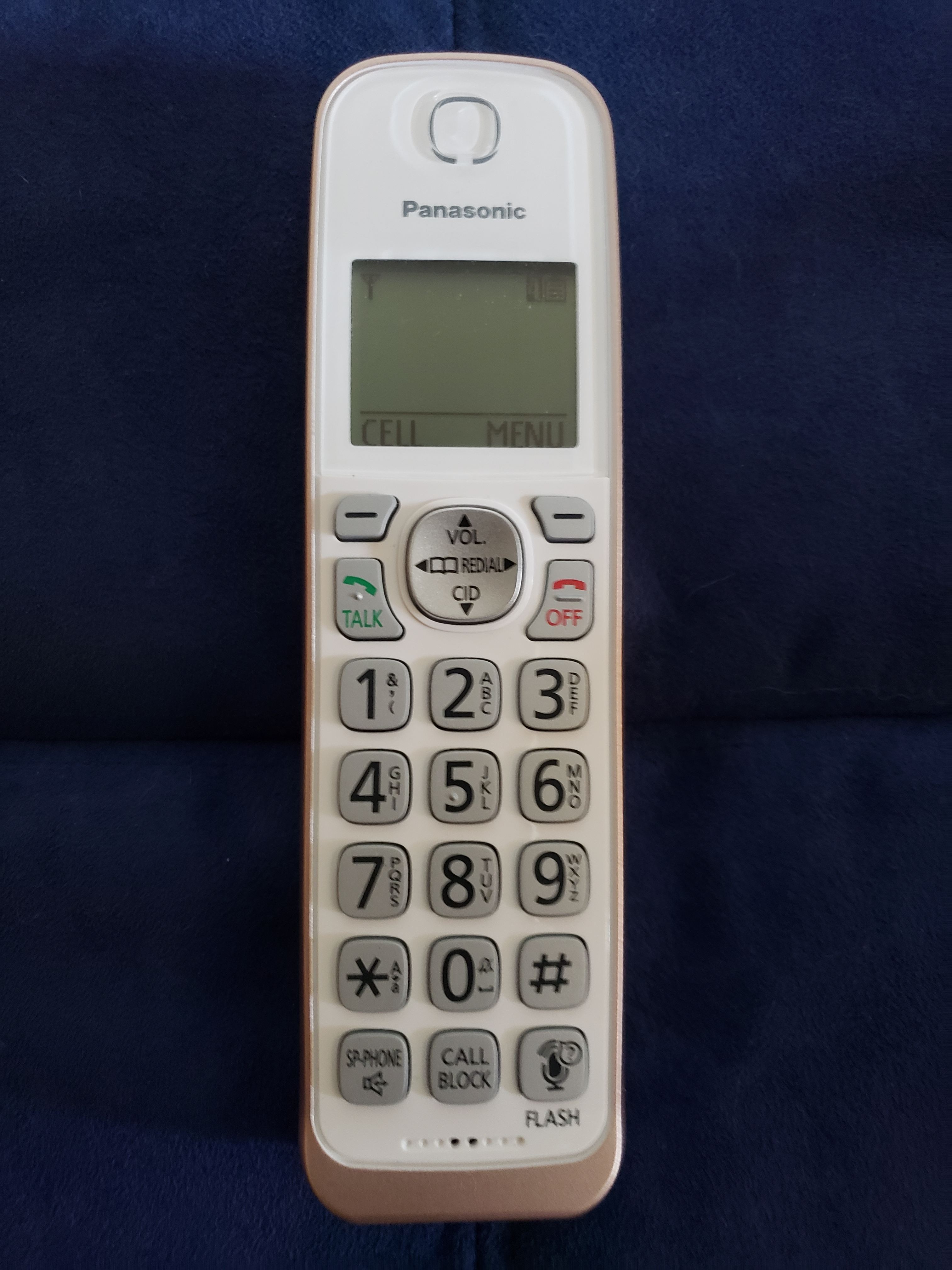
‘the old times’ with them. I got her a cordless phone because that is what she was accustomed
to using. That seemed like it would be more convenient and would be safer without any cord.
She could keep the cordless phone near her during the day rather than having to be getting up
to answer a corded phone that was in a fixed location.
However, it wasn’t long before her calling out created a number of problems (ie calling 911
and saying she had been kidnapped). So the facility removed her private phone. It needed to be
answer-only. While reverting back to an old corded touch tone phone with the buttons removed
(or just disconnected) was an option, I elected to convert her cordless phone to be an
Answer-Only Phone instead.
Click Here for Details
|
Assisted Living facilities are good to have whenever you really need them. Continuing
to support your family member with little things to improve their quality of life should
not go away just because they have moved. However it becomes a little more difficult to
do when they are not right there with you. So it requires a little more creative thinking.
Both of these items were effective. Once the safe bed was installed, there were no additional
instances of falling out of bed reported. The answer-only phone was effective and provided
the expected outside contact. However, it eventually became extraneous.