A Safe Dementia Bed . . . . . . . . . . . . JR Nelis 17OCT20
My wife had Vascular Dementia. Her condition deteriorated to the point where I had
to move her into an Assisted Living facility.
There is something inherent within us that allow us to sense whenever we are at the edge
of a bed while we are sleeping. We will somehow sense that edge, stop rolling in that
direction, and will remain in the bed. However, that inherent ability to sense that edge
is frequently lost whenever one has dementia. At the facility, my wife had rolled out of
her bed more than once. Initially it just resulted in bruises. However a roll-out
eventually resulted in a fractured hip, requiring partial hip replacement surgery,
rehabilitation, and some loss of mobilization.
After the first instance of the facility reporting that she had rolled out of bed, I
suggested that it sounds like it is time for a partial bed rail to be installed
so that this roll-out does not occur again (a partial bed rail is a half length
rail that is just at the top half of the bed so there is still freedom to get
in and out of the bed unassisted). I was told that they were not allowed to use
any kind of a bed rail or any of the similar restrictive safety devices that I
have seen advertised.
Researching this,I found that some people have somehow gotten themselves trapped in
gaps between a bed rail and the mattress and were asphyxiated. Others have climbed
over a bed rail and have taken a much harder fall with an injury. Based on a few instances
of those unfortunate events occurring, and the resulting litigation, thousands of people
are now at risk of getting seriously hurt by falling out of beds without safety rails.
However, while researching I found that there are things called ‘Roll Guards” that are
still permitted. But all of the Roll Guards that I found on-line were just soft cushions
that could be overcome. In fact, I was told that one of these soft Roll Guards was already
being used on my wife’s bed whenever she did the roll-out that resulted in her hip
fracture. I concluded that what was needed was a more substantial Rigid Roll Guard.
Something that was rigid enough to be detected so that it is more likely to prevent
any further movement in that direction.
So I created a ‘Safe Dementia Bed’ with a built-in permanent ‘Rigid Roll Guard’
I am not going to go into a lot of step by step detail, because the bed frame that you
start with will dictate the details of your construction. I used a bed frame that I
purchased from Wayfair. It was an all wood frame, with a lot of slats so that it could be
used with just a mattress. Bed frames seem to come and go, so this link to what I used
may no longer be valid:
https://www.wayfair.com/baby-kids/pdp/earle-twin-platform-bed-w004051137.html
In retrospect, if I had found a commercial wooden frame bed that had a solid headboard
and a solid footboard, that would have saved me some work. I would not have had to fill
in the open areas where I felt that there could be some limb entrapment if I just left
them open. However, at thye time of my search, I did not find one like that.
My Safe Dementia Bed design is based on using a Plush Pillow Top Mattress. A Plush
Pillow Top mattress is necessary to provide the necessary compression. You will see
that below. I purchased my Plush Pillow Top Mattress from The Original Mattress Factory,
a local Pittsburgh PA company. However, that style of mattress is readily available in
just about any brand.
The Plush Pillow Top Mattress is actually my Secret Sauce!! You must use a Plush Pillow
Top Mattress in order to obtain the compression that is necessary for the slightly
lower Rigid Roll Guards to be detected whenever rolling towards them. Using any other
type of mattress that does not provide that degree of compression would not allow the
Rigid Roll Guards to be an effective deterrent. )If you used higher Rigid Roll Guards,
then they would probably be viewed as being non-permissible ‘Bed Rails’)
CLICK on any Picture for a Larger View:
|
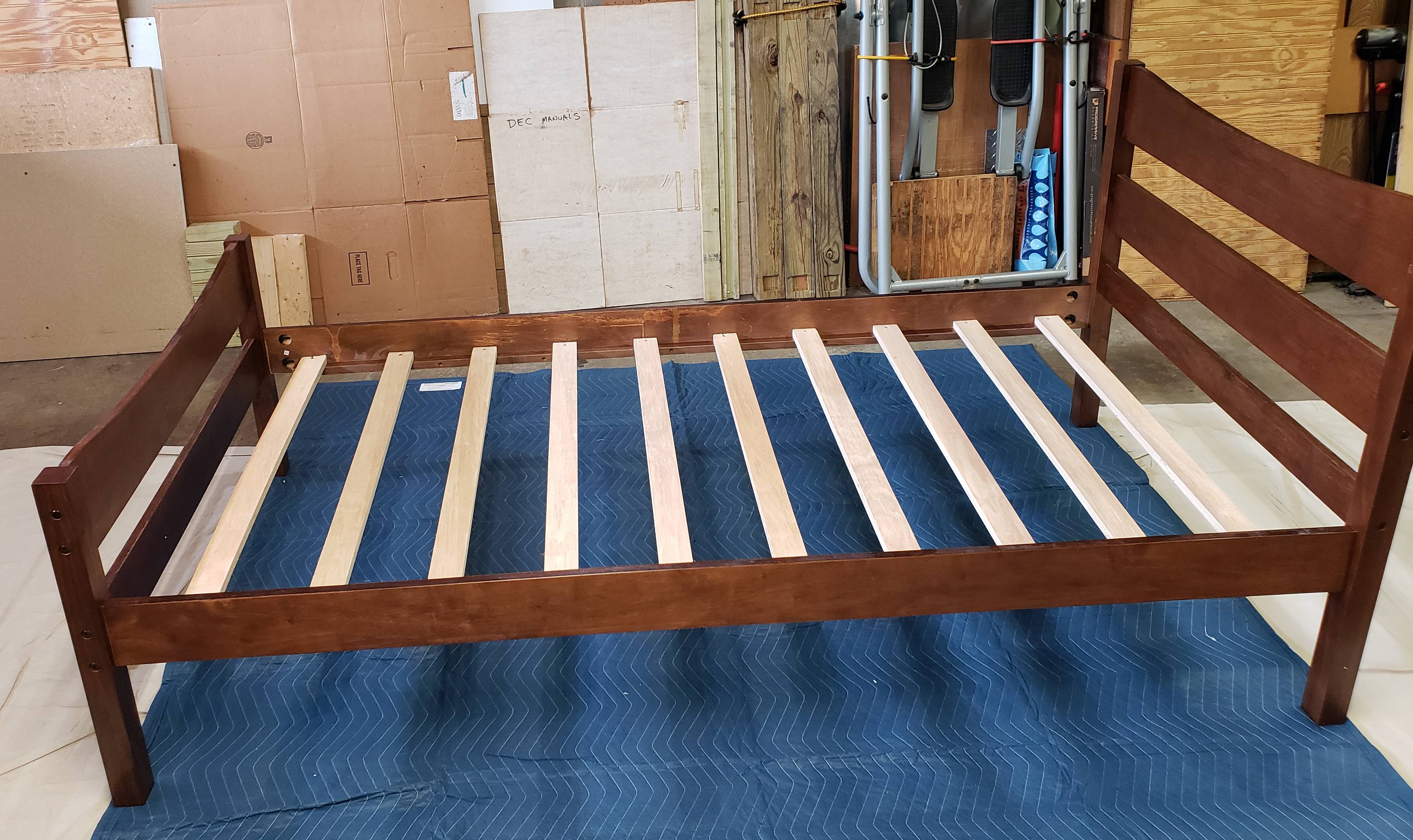
Here is the commercial bed frame that I started with.
|
|
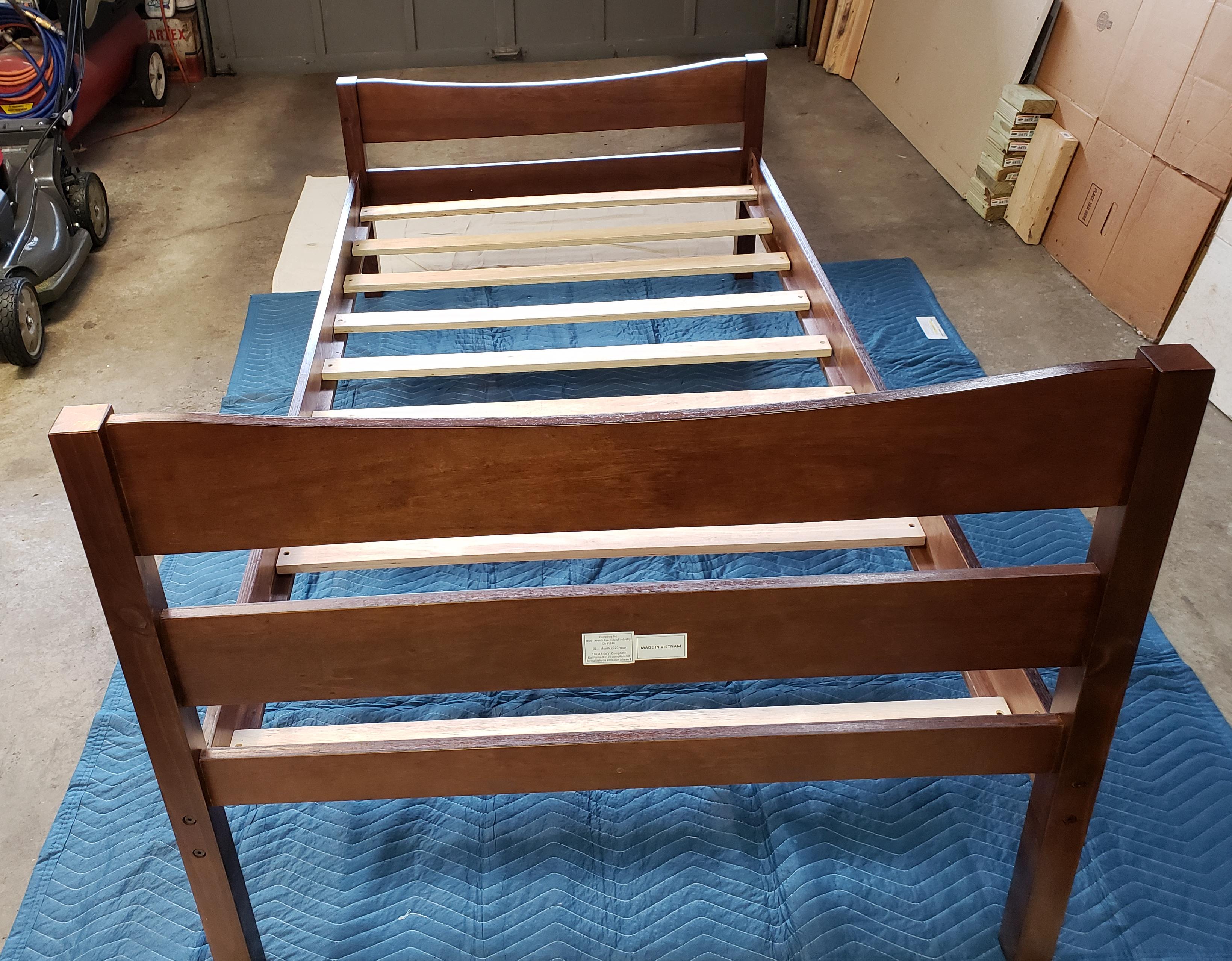
The headboard and footboard openings are unacceptable.
|
|
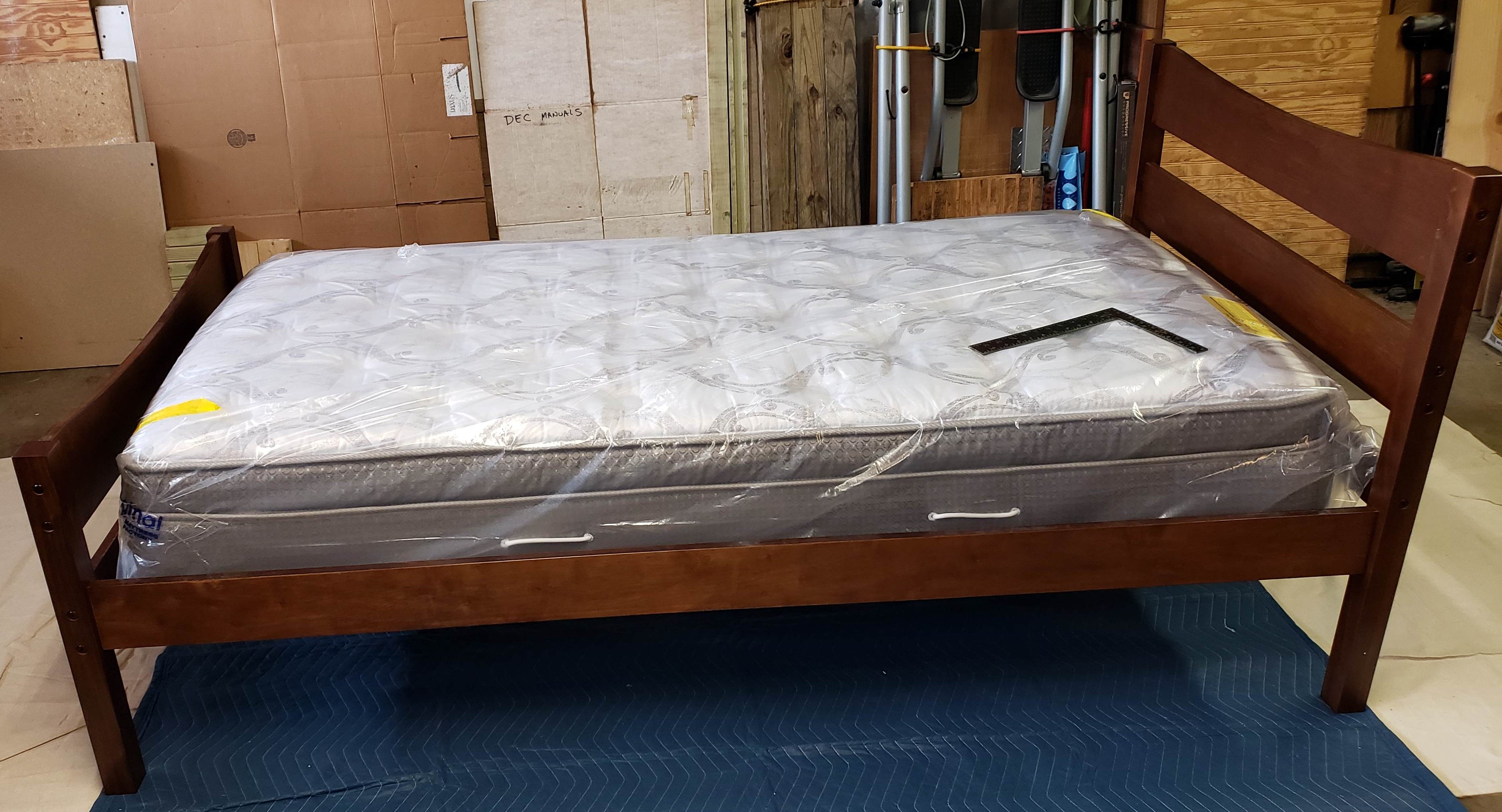
There is no Side Roll Guard with the Plush Mattress on the factory frame.
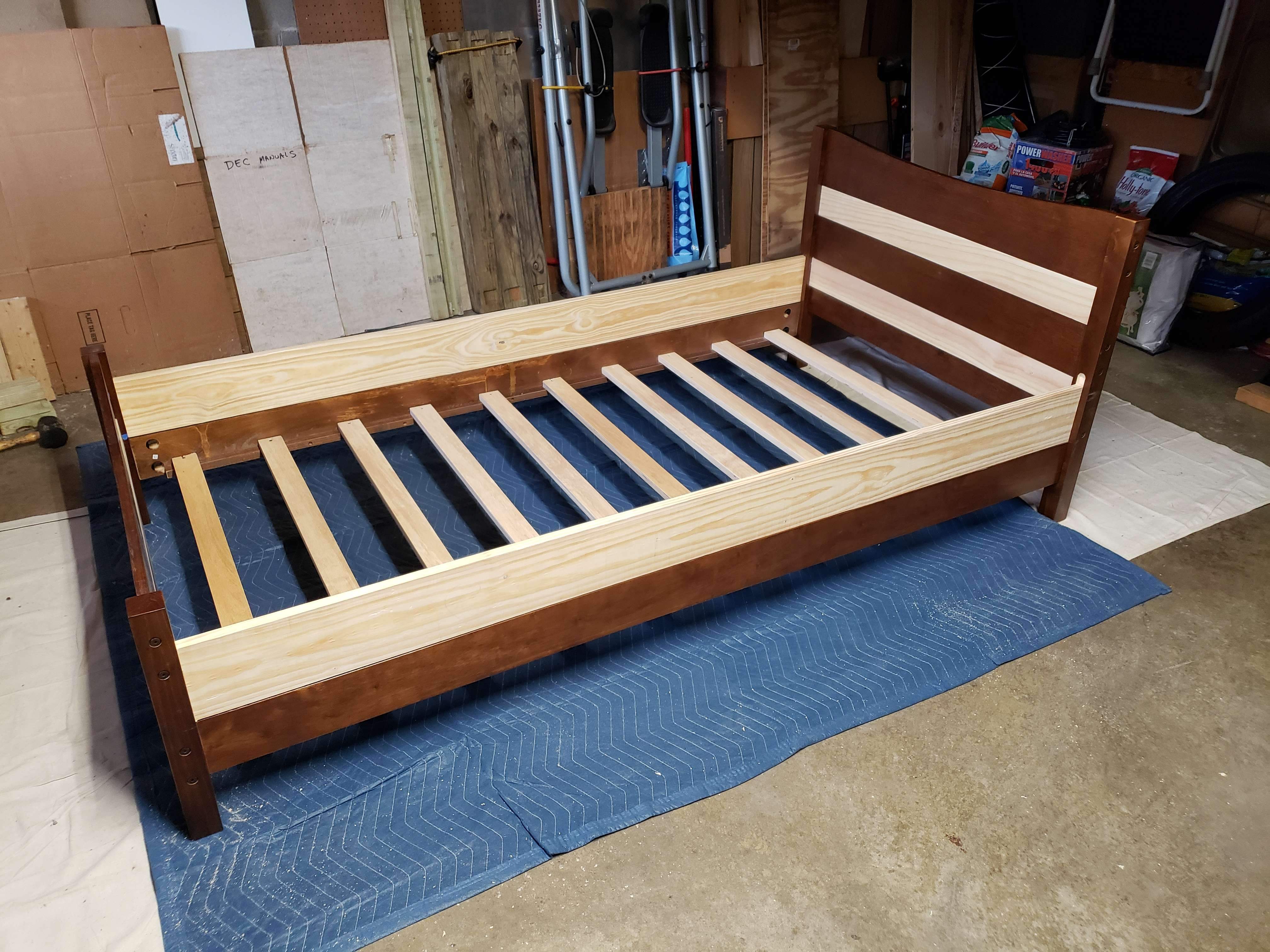
I did the following to convert this to a “Safe Dementia Bed”:
- Closed off the openings in headboard and footboard.
- Installed Rigid Roll Guards on both sides.
- Lowered the bed so the Rigid Roll Guard tops were 15” high.
|
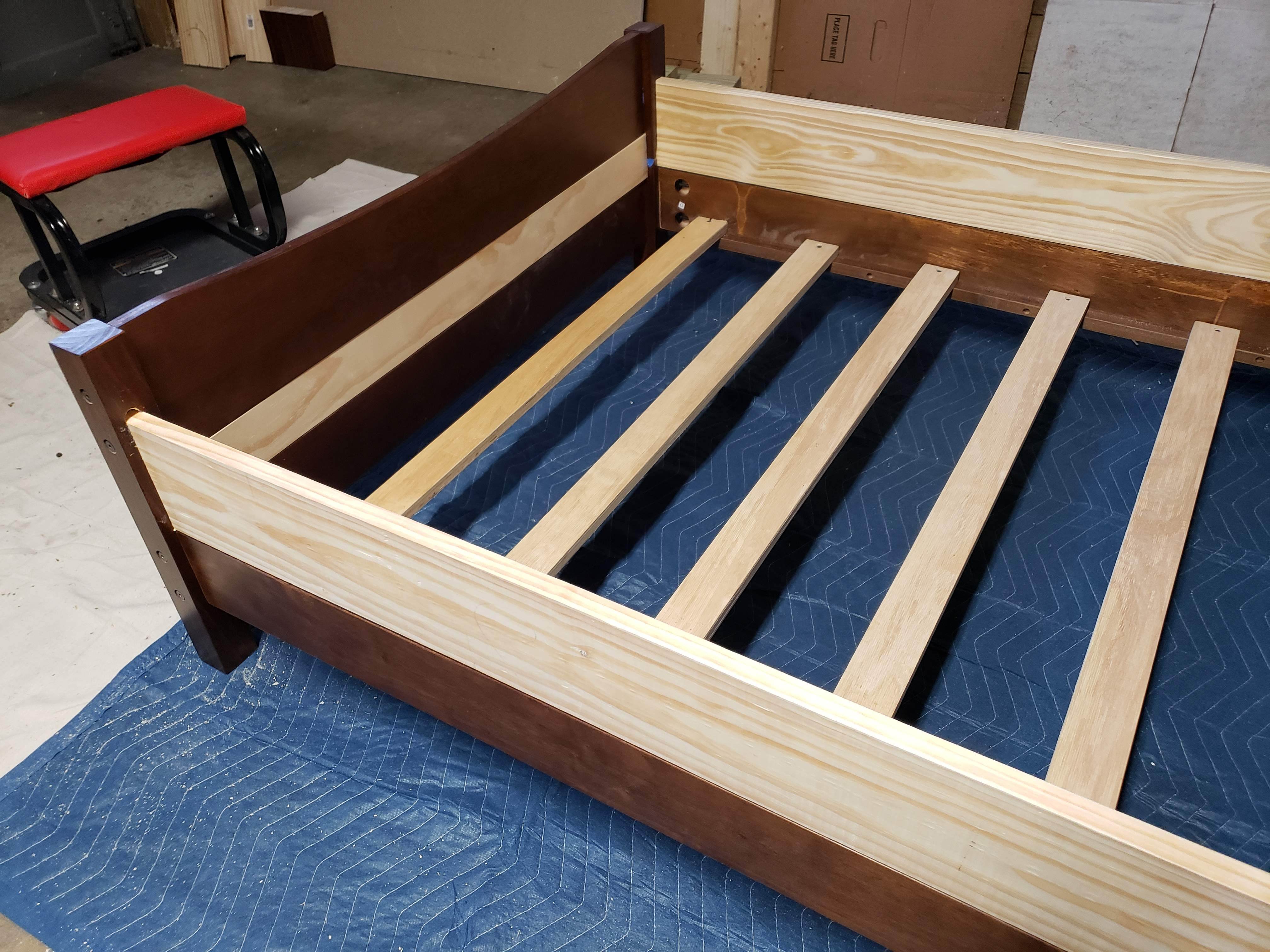
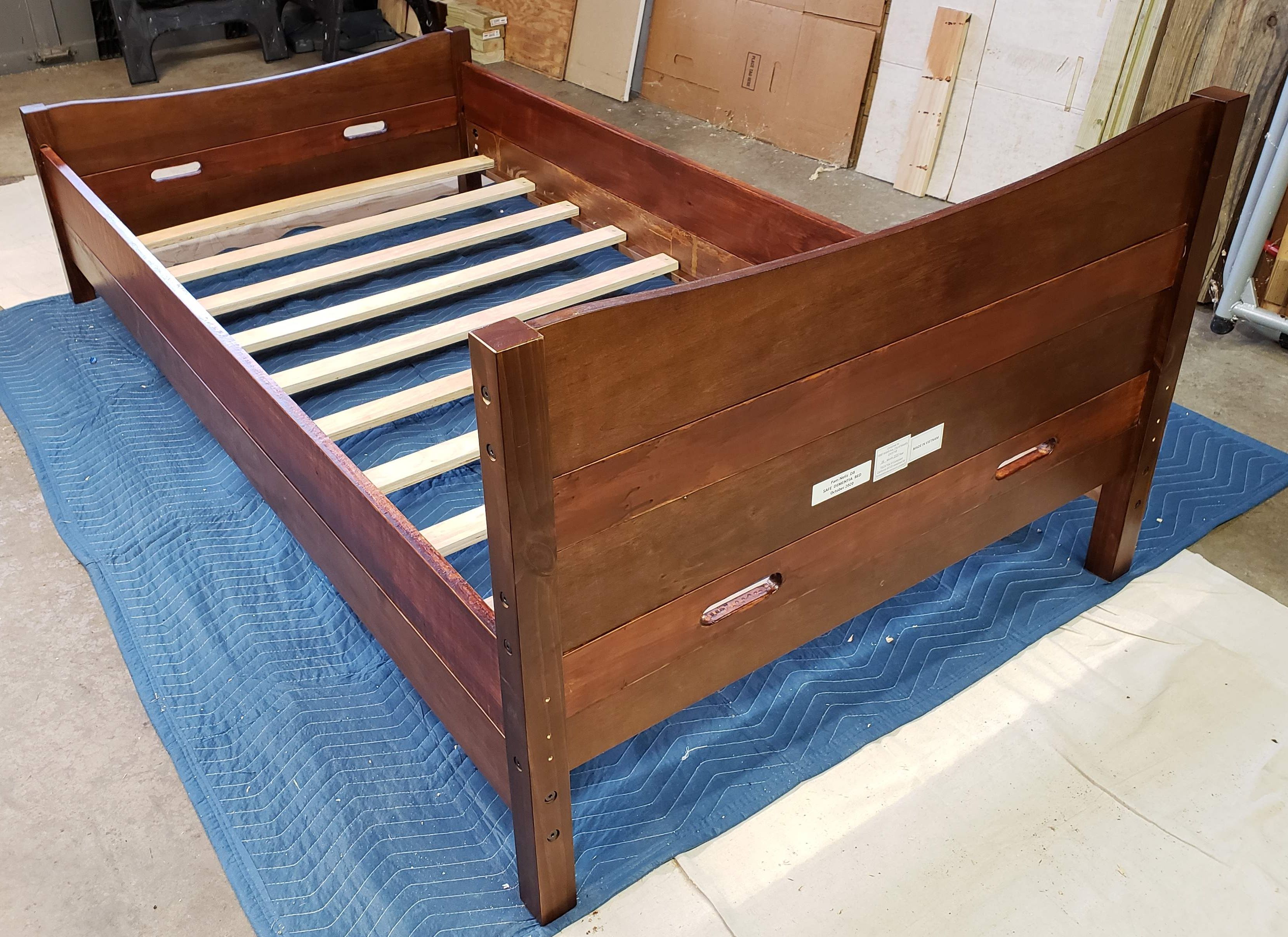
Here is my modified bed. The changes are more obvious in the images that were
taken before I applied the finish to the new wood.
|
I used Finish Grade Pine everywhere.
|
|
I routed slots in the posts to minimize the the need for fastening hardware. (After
some usage I had to add screws into the ends of the new Roll Guard sides - just
using glue ws not enough).
|
|
I could not get an exact match on the color. And putting the finish on with a
brush and not getting any runs is not one of my skills.
The hand-holes were an afterthought – it was hard to move the bed around after I
clsed off the openings on the headboard abd footboard.
|
|
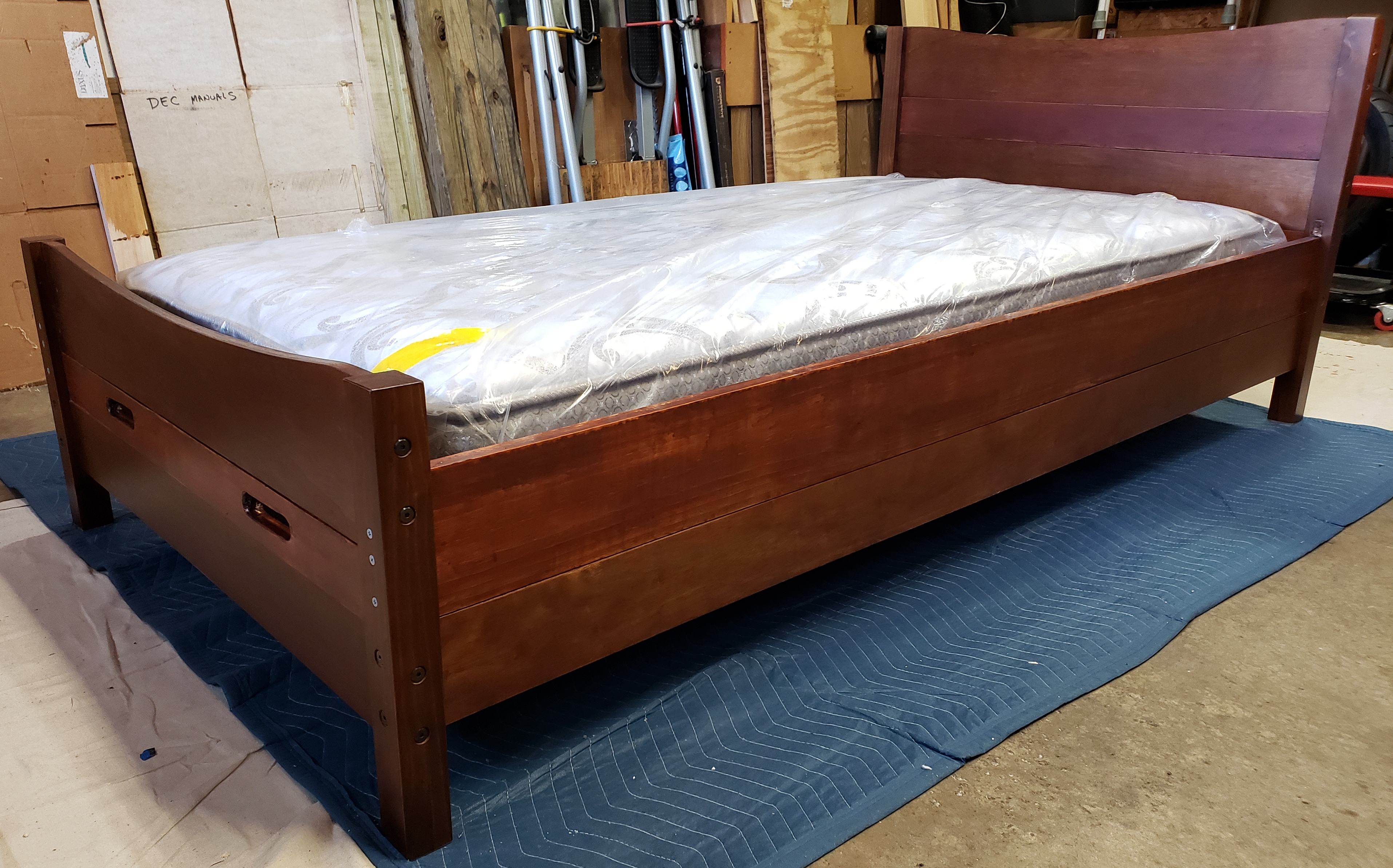
With the comfortable Plush Pillow Top mattress, the top of the mattress is now at
16” above the floor.
|
|
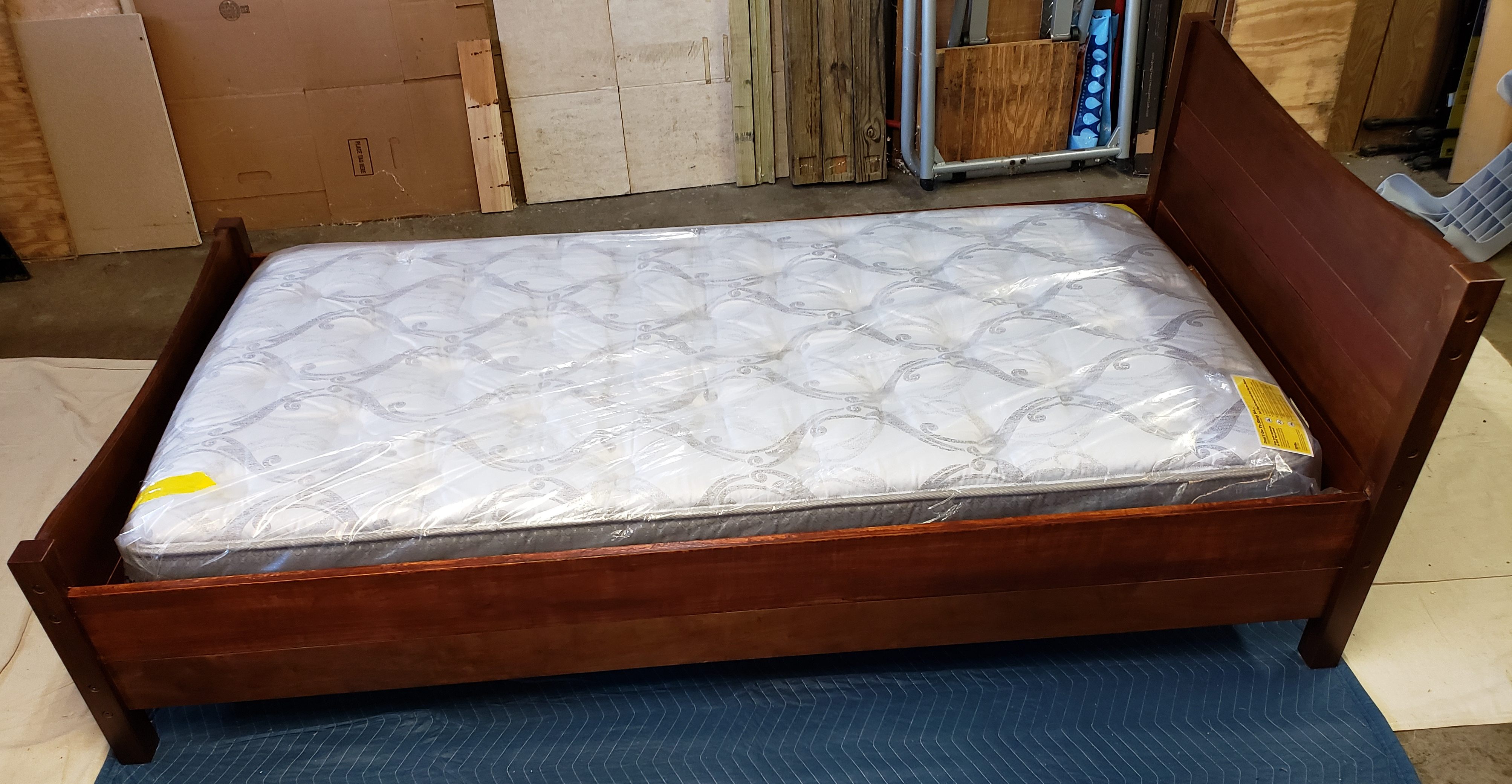
This modified bed should be considered as Early American Style.It is sound and robust, however
the finish is not quite factory perfect.
|
|
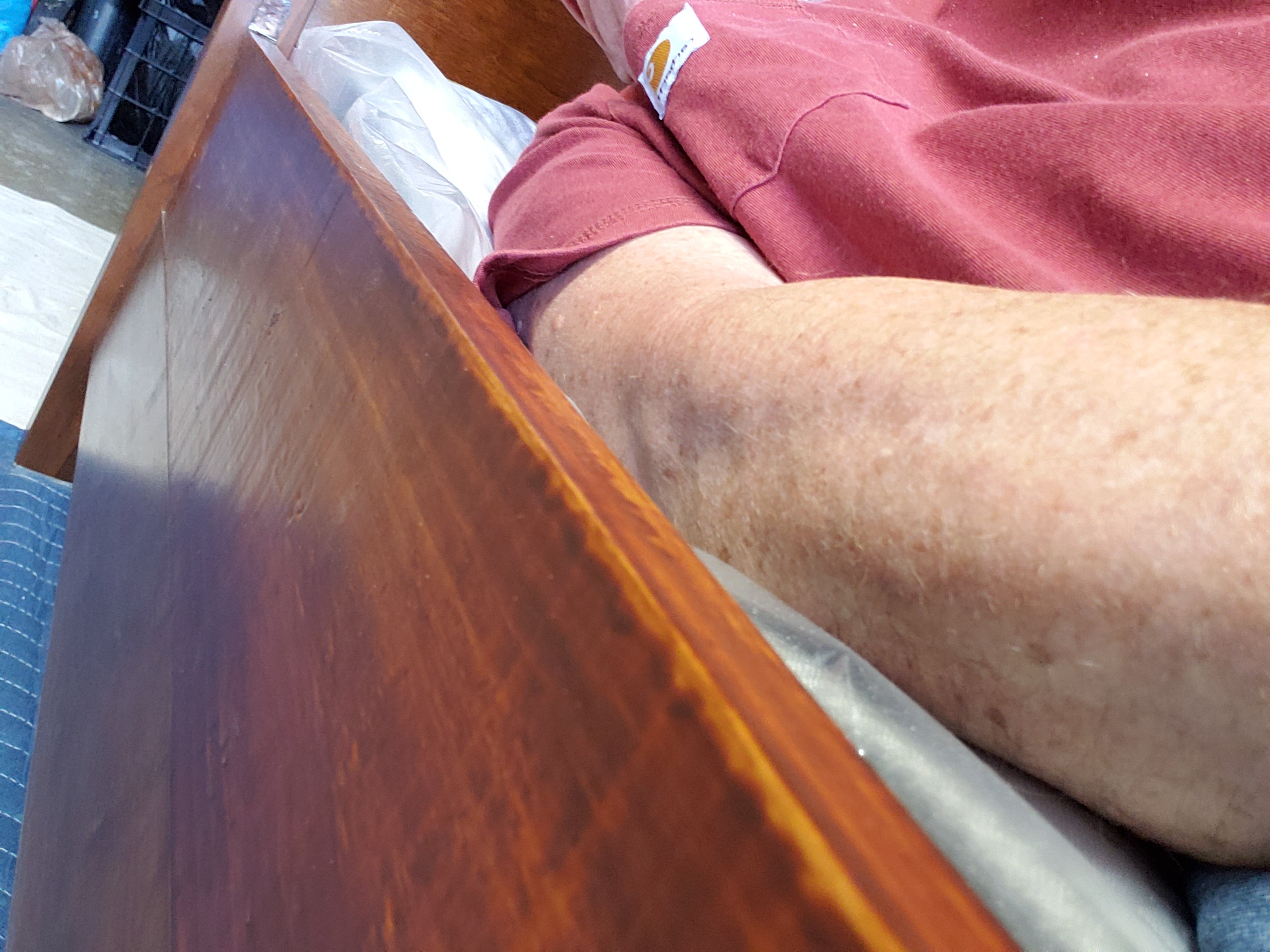
As you can see here, the comfortable Plush Pillow Top mattress will compress enough for
the Rigid Roll Guards to be detected by the sleeper’s body if the sleeper is rolling
towards the edge of this bed. There will be body contact with the Rigid Roll Guard
no matter how you approach it. While reaching a Rigid Roll Guard may wake the sleeper,
that is better than letting the sleeper roll off the edge of the bed and fall to the floor.
|
|
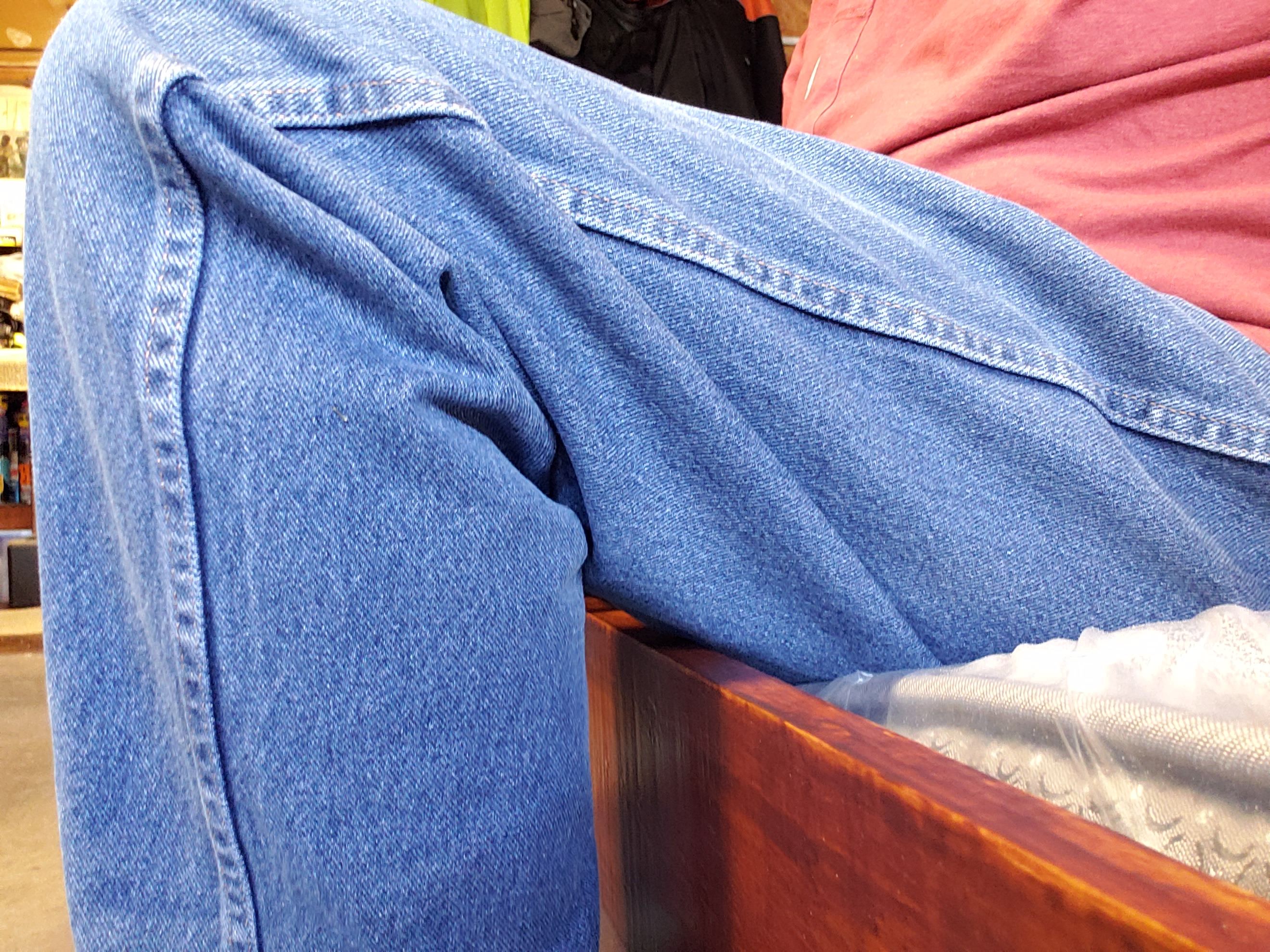
The Rigid Roll Guards do not restrict free planned entry and exit. My feet are on the
floor in this picture.
With the top of the mattress at 16”, it is about the same height as a couch. So getting
up and out of this lowered bed should not be any more difficult that getting up and
out of a couch.
|
|
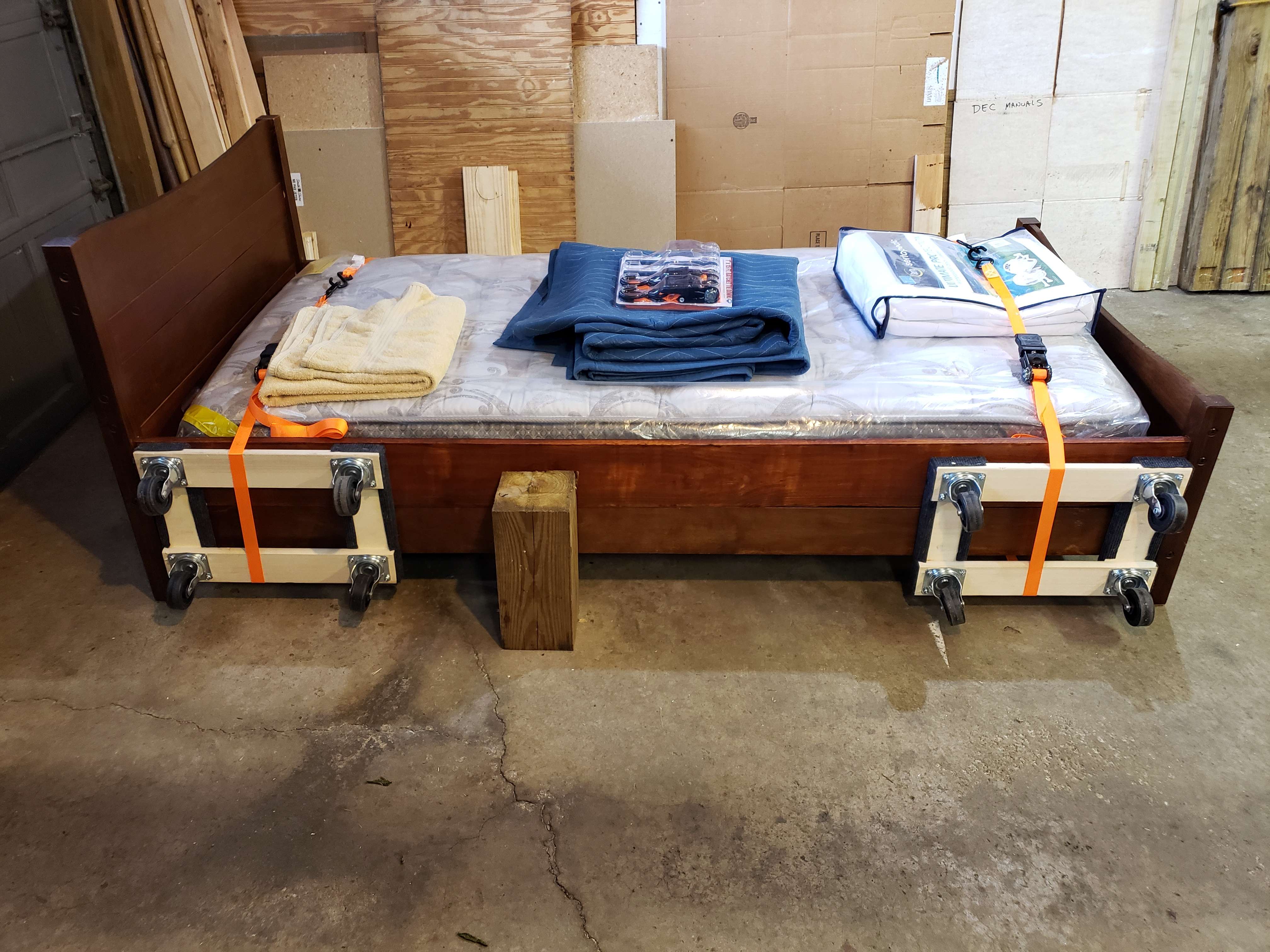
Here is packed and ready to be rolled inot the facility. Be mindful of the height of
the Headboard. The bed needed to go into the facility and then into my wife’s apartment
on its side in order to get through the doors. To make that easy to accomplish, the
headboard height needs to be less than the door width. My headboard is 29.5” high which
alloed esy access for all 30” and wider doors.
|
Summary : Perhaps you know of someone who is in a similar situation. If so, run with this
idea and see what you can create for them in order to keep them safer.You can’t buy it
anywhere. You have to make one yourself. But remember to use my Secret Sauce.